
Single-Use Products
(includes plastics, paper product, and packaging)
Hotels across the industry are already taking meaningful steps to reduce environmental impacts associated with single-use products and packaging, while continuing to deliver efficient operations and meet guest expectations. As sustainability practices evolve, there is an opportunity to build on this strong foundation through targeted enhancements and innovation.
The materials and systems associated with certain single-use plastics and paper-based products can influence greenhouse gas emissions, resource use, and waste outcomes. By continuing to refine sourcing decisions and operational practices, hotels are further strengthening their sustainability performance while maintaining high service standards.
Hotel Action
Hotels can enhance their existing responsible sourcing practices by considering the following approaches:
- Explore opportunities to transition away from products made entirely from virgin materials toward those that incorporate recycled or renewable content
- Offer single-use items (e.g., straws, amenities) on request, where appropriate, to align guest experience with waste reduction goals
- Leverage available tools such as the Single-Use Products and Packaging Decision Tree, Understanding Packaging Scorecard, and Paper Calculator to evaluate options
When selecting products, hotels may consider prioritizing options with the following attributes:
- Reusable, where operationally feasible
- Made with recycled content (15–30% minimum, preferably higher) or renewable materials (e.g., wood, sugarcane)
- Designed with reduced material use (lightweighting)
- Compatible with existing waste systems (recyclable or compostable, where infrastructure exists)
- Free from oxo-degradable or oxo-biodegradable materials
- Supported by supplier take-back or recycling programs
- Verified by credible third-party sustainability certifications

For hotels evaluating compostable or biodegradable products, aligning these choices with available waste management services—such as commercial composting—can help maximize effectiveness and value.
Click on the following areas to learn more about responsibly sourcing eggs and pork.
Key Impact Areas
- Environmental
- Social
Plastic Products/Packaging
Plastics play an important role in many hotel operations due to their durability and cost-effectiveness. At the same time, evolving research and industry trends highlight opportunities to reduce long-term environmental impacts associated with production, use, and disposal. Many hotels are already exploring ways to optimize usage, improve material selection, and reduce waste generation.
Paper Products/Packaging
Paper-based products are widely used across hospitality operations. Sourcing decisions can influence broader environmental outcomes such as forest management, water use, and emissions. Increasingly, hotels are integrating certified or recycled-content paper products into their procurement strategies as part of continuous improvement efforts.
Public Policies - Passed and Proposed as of January 2026
Regulations related to single-use products are expanding across many states and municipalities. Hotels are already navigating these requirements successfully, and staying informed on evolving policies can support continued compliance and proactive planning.
California
| Product Covered | Law/Bill | Enforcement Date | Requirements |
|---|---|---|---|
|
Single-Use Items/Amenities |
AB 1884 |
January 1st, 2019 |
Sit-down restaurants cannot automatically provide plastic straws (exceptions for disability/medical needs). |
|
|
AB 1162 |
January 1st, 2023 (≥50 rooms); January 1st, 2024 (<50 rooms) |
Ban on single-use small plastic toiletry bottles. |
|
Packaging |
SB 270 & SB 1053 |
January 1st, 2026 |
Ban on all single-use plastic bags (check local ordinances for hotel applicability). |
|
|
SB 54 |
January 1st, 2032 |
All single-use plastic packaging and foodware must be recyclable or compostable (EPR law). |
Colorado
| Product Covered | Law/Bill | Enforcement Date | Requirements |
|---|---|---|---|
|
Packaging |
HB1-11162 |
January 1st, 2024 |
Ban on single-use plastic carryout bags; ban on polystyrene foam takeout containers/cups. |
|
|
HB22-1355 |
January 1st, 2025 |
Extended Producer Responsibility (EPR) program for packaging & paper. |
Delaware
| Product Covered | Law/Bill | Enforcement Date | Requirements |
|---|---|---|---|
|
Single-Use Items/Amenities |
SB 51 |
January 1st, 2025 |
Ban on single-use plastic stirrers, cocktail picks, sandwich picks. |
|
Packaging |
SB 51 |
January 1st, 2025 |
Ban on polystyrene foam containers and single-use plastic stirrers/picks. |
Hawaii
| Product Covered | Law/Bill | Enforcement Date | Requirements |
|---|---|---|---|
|
Single-Use Items/Amenities |
HB 348 (proposed) |
January 1, 2026 (≥50 rooms); January 1, 2028 (<50 rooms) |
Ban on single-use small plastic toiletry bottles. |
Illinois
| Product Covered | Law/Bill | Enforcement Date | Requirements |
|---|---|---|---|
|
Single-Use Items/Amenities |
SB 2960 |
January 1, 2025 (≥50 rooms); January 1, 2026 (<50 rooms) |
Ban on single-use small plastic toiletry bottles. |
Maine
| Product Covered | Law/Bill | Enforcement Date | Requirements |
|---|---|---|---|
|
Packaging |
EPR Law |
May 2026 |
Producers must join stewardship org, report quantities, and pay fees for recycling/waste mgmt. |
Maryland
| Product Covered | Law/Bill | Enforcement Date | Requirements |
|---|---|---|---|
|
Packaging |
SB0901 |
June 1st, 2025 |
Packaging & Paper Products Producer Responsibility Plans |
Minnesota
| Product Covered | Law/Bill | Enforcement Date | Requirements |
|---|---|---|---|
|
Packaging |
EPR Law |
July 1st, 2025 |
Producers must join PRO, report materials, and pay fees for recycling/waste mgmt. |
New York
| Product Covered | Law/Bill | Enforcement Date | Requirements |
|---|---|---|---|
|
Single-Use Items/Amenities |
SB 1505 (pending) |
TBD |
Straws provided only upon request. |
|
|
S543 |
January 1st, 2025 (≥50 rooms); January 1st, 2026 (<50 rooms) |
Ban on single-use small plastic toiletry bottles. |
|
Packaging |
Foam Ban |
January 1st, 2022 |
Ban on expanded polystyrene foam containers and loose fill packaging. |
Oregon
| Product Covered | Law/Bill | Enforcement Date | Requirements |
|---|---|---|---|
|
Single-Use Items/Amenities |
SB 551 (proposed) |
July 1, 2027 (≥50 rooms); July 1, 2028 (<50 rooms) |
Ban on small toiletry bottles; utensils/condiments only upon request. |
|
Packaging |
SB 543 |
January 1st, 2025 |
Ban on polystyrene foam containers and PFAS in packaging. |
|
|
Recycling Modernization Act |
July 1st, 2026 |
EPR requirement for packaging, food serviceware, and printed paper. |
Rhode Island
| Product Covered | Law/Bill | Enforcement Date | Requirements |
|---|---|---|---|
|
Packaging |
GL § 21–27.3-2 |
January 1st, 2025 |
Ban on polystyrene foam food containers and plastic beverage stirrers. |
|
|
SB 2850 |
January 1st, 2025 |
Ban on PFAS in food packaging. |
Washington
| Product Covered | Law/Bill | Enforcement Date | Requirements |
|---|---|---|---|
|
Single-Use Items/Amenities |
AB 1884 |
January 1st, 2019 |
Sit-down restaurants cannot automatically provide plastic straws (exceptions for disability/medical needs). |
|
|
AB 1162 |
Jan 1st, 2023 (≥50 rooms); Jan 1st, 2024 (<50 rooms) |
Ban on single-use small plastic toiletry bottles. |
|
Packaging |
SB 270 & SB 1053 |
Jan 1st, 2026 |
Ban on all single-use plastic bags (check local ordinances for hotel applicability). |
|
|
SB 54 |
Jan 1, 2032 |
All single-use plastic packaging and foodware must be recyclable or compostable (EPR law). |
Additional Resources
Guests, investors, and corporate partners are increasingly interested in sustainability initiatives. Many hotels are already responding to these expectations, and further enhancements—particularly in packaging and single-use items—can help strengthen brand positioning and guest engagement.
Product Alternatives
There are a growing number of alternatives available that balance performance, cost, and sustainability. Hotels can continue building on their current practices by piloting new materials and solutions that align with operational needs and available waste infrastructure.
Examples include:
- Wooden or reusable cutlery
- Compostable or paper-based straws
- FSC-certified or recycled-content packaging
- Reusable serviceware where appropriate



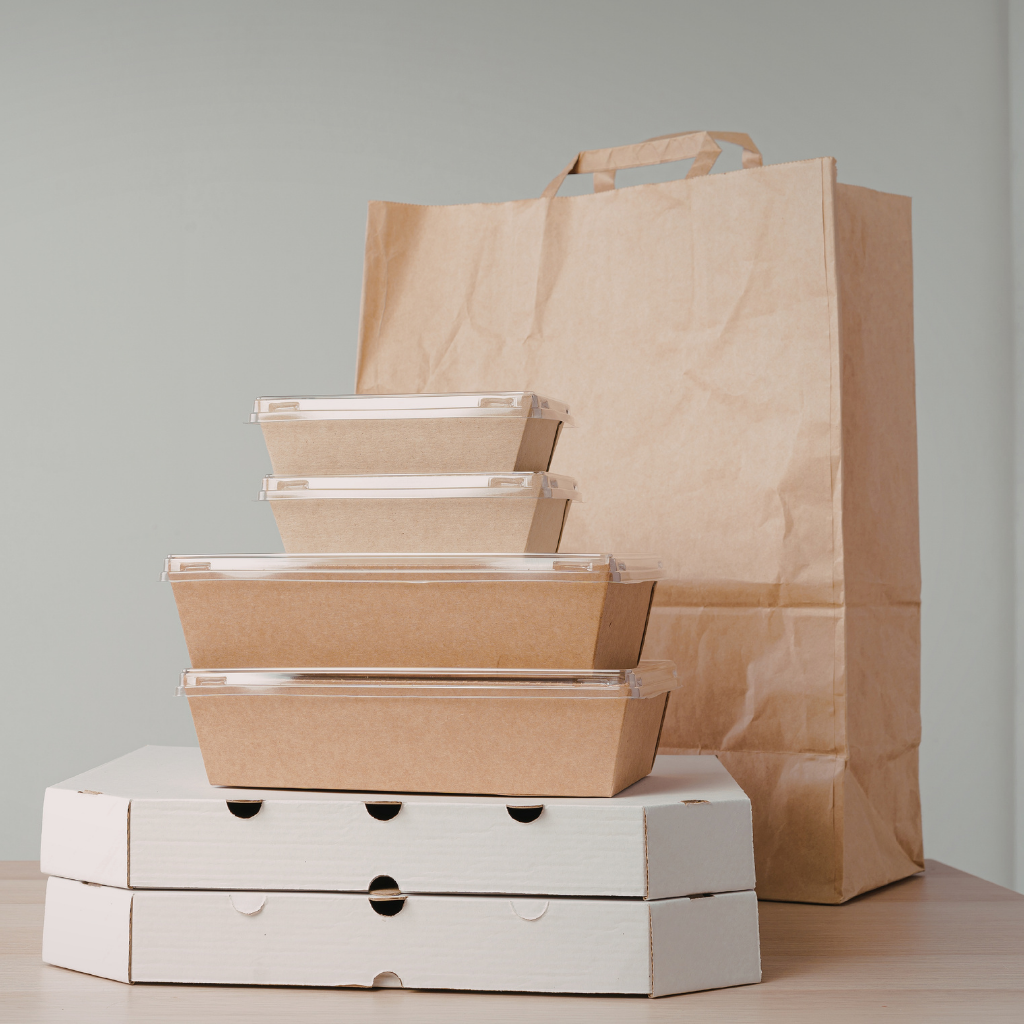

Third-Party Certifications for Sustainable Single-Use Alternatives
| Certification | Description | Certifying Body | Notes |
|---|---|---|---|
|
Compostability per ASTM D6400 / D6868 |
BPI (Biodegradable Products Institute) |
Recognized certification for commercial composting |
|
|
Material health, recyclability, circularity |
Cradle to Cradle Products Innovation Institute |
Holistic sustainability certification including recyclability |
|
|
Paper/fiber sourced from responsibly managed forests |
Forest Stewardship Council |
Very popular in U.S. for paperboard, cardboard, paper packaging |
|
|
Can apply to disposable packaging with environmental claims, but primarily for cleaning products and paper. |
Green Seal |
Around since 1989, very widely recognized in the U.S. |
|
|
Independent verification of recycled content claims for packaging and other materials |
Intertek Group |
Recognized in the U.S. but more known by manufacturers and retailers |
|
|
Compostability (industrial and home composting standards EN 13432, EN 14995) |
TÜV Austria |
Recognized internationally, used in both Europe and U.S. |
|
|
Percentage of recycled content (post-consumer and post-industrial) |
SCS Global Services |
Used globally, widely respected for recycled content claims |
|
|
Sustainable fiber sourcing |
Sustainable Forestry Initiative |
Mostly U.S./Canada-focused; sometimes preferred over FSC in North America |
|
|
Recycled content claims in products |
UL Environment |
Often paired with other UL sustainability certifications |
|
|
Verifies minimum % of renewable (biobased) content |
USDA BioPreferred Program |
Widely used in U.S.; recognized by federal procurement |
*These certifications assess the environmental and social aspects of an agricultural operation more holistically beyond specific animal welfare standards.
Cost Considerations - $-$$$
Hotels are already skilled at managing cost, quality, and guest experience. Many sustainability-focused products are becoming more competitive in price, especially when paired with strategies such as:
- Reducing overall consumption
- Offering items on demand
- Leveraging bulk purchasing agreements
- Phasing in changes through pilot programs
Continuous Improvement Approach
Many hotels are already taking meaningful steps in this area. Small-scale testing and gradual implementation can help ensure that enhancements align with guest expectations and business goals. For example, adjusting how frequently certain items are offered can reduce waste while maintaining satisfaction—allowing hotels to reinvest savings into higher-performing sustainable alternatives.

Corporate Action
The hospitality industry is part of a broader movement toward more sustainable materials and circular systems. By continuing to evolve sourcing practices, hotels can play a leadership role while building on the strong operational foundations already in place.
Return back to the Responsible Sourcing Homepage or explore additional modules.
Return back to the Responsible Sourcing Homepage or explore additional modules.
Return back to the Responsible Sourcing Homepage or explore additional modules.
Return back to the Responsible Sourcing Homepage or explore additional modules.
Return back to the Responsible Sourcing Homepage or explore additional modules.
Return back to the Responsible Sourcing Homepage or explore additional modules.
Return back to the Responsible Sourcing Homepage or explore additional modules.
Return back to the Responsible Sourcing Homepage or explore additional modules.
Plastics – Human Health
Microplastics, which are defined as plastics that have been broken down to less than 5 millimeters in size, result from the breakdown of larger plastic items. Microplastics can enter the human body through food chains and drinking water and have been linked to negative human health impacts.
Plastics – Unfair Labor Practices
Paper – Unfair Labor Practices