
Product Alternatives
Transforming global supply chains is a challenging endeavor. The decision to switch from a traditional, product to a sustainable product is not always simple and requires input from multiple hotel teams and suppliers to ensure a new product is viable.
Thousands of sustainable products are available, and these markets continue to mature. In the event responsible products are not available in the U.S, companies and hotels should collaborate with suppliers to explore opportunities for developing new products that meet defined responsible sourcing requirements.
Regulations, cost, product quality, and guest preferences are the primary factors to consider when transitioning to more sustainable products.

Many barriers exist that may prevent hotels from making the most responsible product choices available; however, cost is typically the most common barrier cited by hospitality companies and individual hotels. Product availability and supplier loyalty are other barriers cited by the hospitality industry.
 Brand standards should be reviewed to ensure there are not additional internal challenges preventing hotels from switching to more sustainable products.
Cost and product availability vary widely across the U.S. Hotels should not rely on average price estimates or list prices, as these figures rarely reflect actual market conditions. There is no single resource that provides accurate, up-to-date cost comparisons for sustainable products. Each hotel must research locally available options, engage suppliers directly, and consider how pricing may shift based on contract terms, bulk purchasing volumes, and regional supply dynamics. Conducting this due diligence will ensure sourcing decisions are both responsible and financially realistic.
Click on the following areas to learn more about responsible sourcing considerations
Hotels should strive to locally source products to reduce greenhouse gas emissions associated with transportation and support local economies. Local suppliers should be held to the same environmental, social and/or animal welfare requirements as other suppliers.
The definition of locally sourced varies by industry but broadly refers to products that are within the same community, city, region or within a defined mileage radius.
Cost Considerations $-$$$
The decision to switch to any alternative, more sustainable product often centers on the difference in cost.
Hotels should work with current and potential suppliers to prioritize transitioning product types where the current price gap between conventional and sustainable options is relatively small, achieving meaningful impact while maintaining cost efficiency.
This analysis will be different for every hotel; therefore, general cost considerations are provided per the below for each of the Priority Categories.
When a sustainable product carries a cost premium, companies and hotels should weigh the broader benefits such as higher guest satisfaction and potential increased business from corporate customers who prioritize sustainability.
The 4 Priority Categories are assigned as low, medium, or high cost to provide purchasing teams with a general sense of potential incremental cost premiums.
$ Low Cost – Sustainable products and/or suppliers are widely available, resulting in minimum cost premiums.
$$ Medium Cost – Sustainable products are available but may be limited in certain markets. Reduced availability typically results in a cost premium of approximately 10 – 50%.
$$$ High Cost – Sustainable products are not widely available, or the required materials carry a significant price premium, typically ranging from 50 – 100% or more.
Third-Party Certifications for Sustainable Single-Use Alternatives
Sustainability certifications are third-party labels that verify a product meets specific environmental or social responsibility standards. They help consumers and businesses identify products that reduce harm to people and the planet, adding credibility beyond company claims.
In the U.S., these certifications are important because they build trust, support regulatory compliance, and respond to growing consumer and investor demand for sustainable practices.
To achieve certification, products typically must meet defined criteria such as responsible sourcing of raw materials, reduced carbon emissions, safe labor practices, or recyclability. Independent audits and ongoing reporting are usually required to maintain certification, ensuring accountability, and continuous improvement.
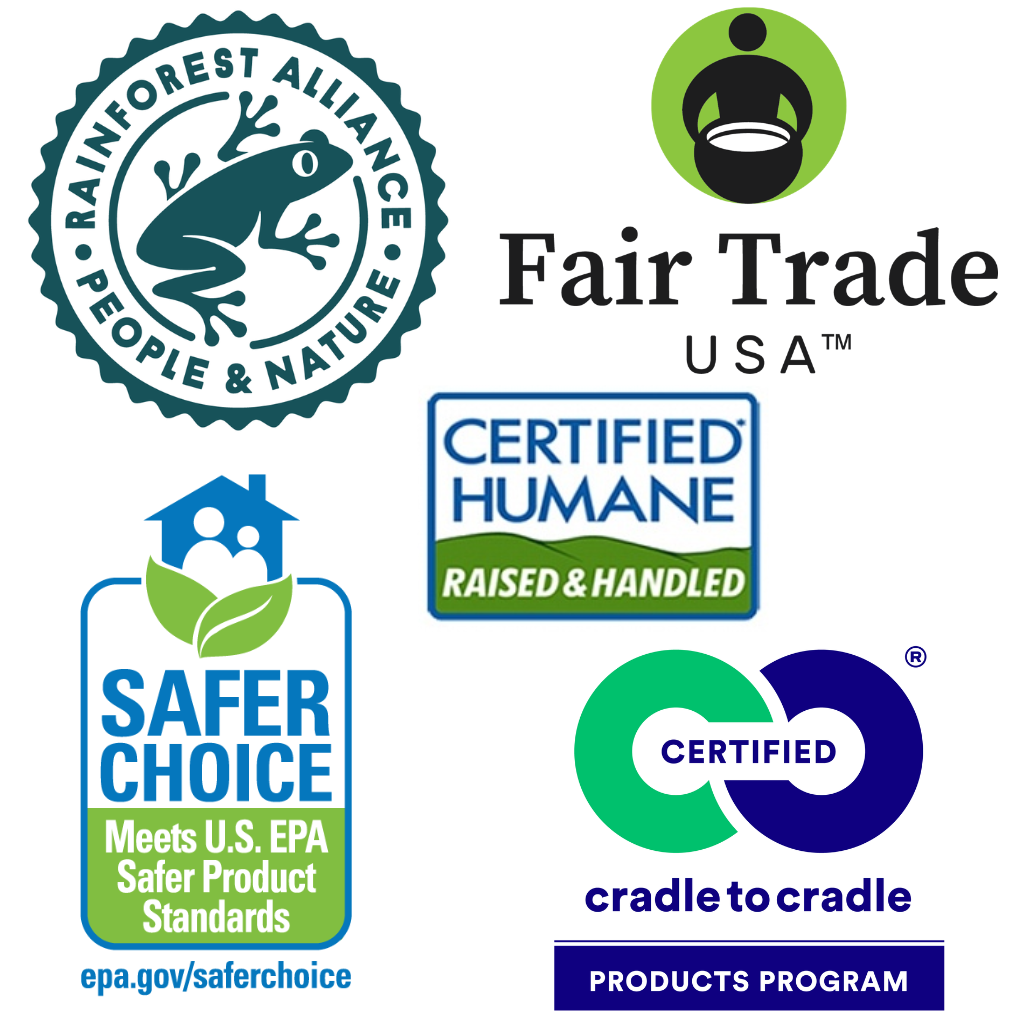
Using reputable third-party sustainability certifications is one of the most effective ways for hotels to ensure products meet credible environmental and social standards.
In some cases, suppliers do not have certified products, however, they make environmental or social claims about their products. Working closely with suppliers, hotels should request official documentation of the claims to ensure they are legitimate and support sustainability goals.
There are dozens of sustainability certifications for products available in the U.S. Visit the summary pages for each of the 4 Priority Categories to learn about applicable third-party certifications for products in those categories.
Other Category Certifications
See below for a list of additional certifications to consider for other categories and products outside of the 4 Priority Categories. Other certifications not listed may be applicable.
Beef/Dairy
| Certification | Products Covered | Description | Certifying Body | Notes |
|---|---|---|---|---|
|
Beef, Dairy |
High-welfare certification for pasture-based, family farms; prohibits confinement and routine antibiotics. |
A Greener World (AGW) |
Considered one of the most rigorous U.S. animal welfare standards. |
|
|
Beef, Dairy |
Verifies humane conditions for farm animals – adequate space, shelter, and no cages or crates. |
Humane Farm Animal Care |
Widely recognized in the U.S.; used across major beef and dairy brands. |
|
|
Beef, Dairy |
Multi-tiered animal welfare certification (Steps 1–5+) evaluating housing, handling, and outdoor access. |
Global Animal Partnership |
Commonly used by U.S. retailers and producers, including Whole Foods Market. |
|
|
Beef, Dairy |
Requires outdoor access, organic feed, and no synthetic hormones or antibiotics. |
U.S. Department of Agriculture (USDA) |
Federal standard combining environmental and animal welfare principles. |
Coffee/Tea/Cocoa
| Certification | Products Covered | Description | Certifying Body | Notes |
|---|---|---|---|---|
|
Coffee |
Shade grown, organic |
The Smithsonian |
Fairly strict compared to other standards and limited usage |
|
|
Coffee, Tea, Cocoa |
Ensures fair prices, ethical labor standards, and community investment for smallholder farmers. |
Fair Trade USA |
U.S.-based certification distinct from Fairtrade International; widely adopted |
|
|
Coffee, Tea, Cocoa |
Promotes sustainable agriculture, biodiversity conservation, and improved farmer livelihoods. |
Rainforest Alliance |
Actively used across U.S. brands such as Hershey, Nestlé, and Lipton. |
|
|
Coffee, Tea, Cocoa |
Requires organic farming practices that protect soil, water, and biodiversity. |
USDA |
Commonly paired with Fair Trade or Rainforest Alliance certifications. |
Seafood
| Certification | Products Covered | Description | Certififying Body | Notes |
|---|---|---|---|---|
|
Farmed Seafood |
Promotes responsible aquaculture practices, including water quality, feed sourcing, and worker welfare. |
Aquaculture Stewardship Council |
Common certification for imported farmed seafood in U.S. retail and foodservice |
|
|
Farmed Seafood |
Ensures sustainability, food safety, animal welfare, and social accountability in aquaculture operations. |
Global Seafood Alliance |
U.S.-recognized; major suppliers use BAP 2–4 star certification levels |
|
|
Wild & Farmed Seafood |
Focuses on fair wages, safe working conditions, and environmental stewardship in fisheries and aquaculture. |
Fair Trade USA |
Only U.S.-based fair trade program covering seafood |
|
|
Wild-Caught Seafood |
Verifies sustainable fishery management, healthy stock levels, and minimal environmental impact. |
Marine Stewardship Council |
Leading certification for wild-caught seafood sold in the U.S. |
Return back to the Responsible Sourcing Homepage or explore additional modules.
Return back to the Responsible Sourcing Homepage or explore additional modules.
Return back to the Responsible Sourcing Homepage or explore additional modules.
Return back to the Responsible Sourcing Homepage or explore additional modules.
Return back to the Responsible Sourcing Homepage or explore additional modules.
Return back to the Responsible Sourcing Homepage or explore additional modules.
Return back to the Responsible Sourcing Homepage or explore additional modules.
Return back to the Responsible Sourcing Homepage or explore additional modules.