
Animal Products
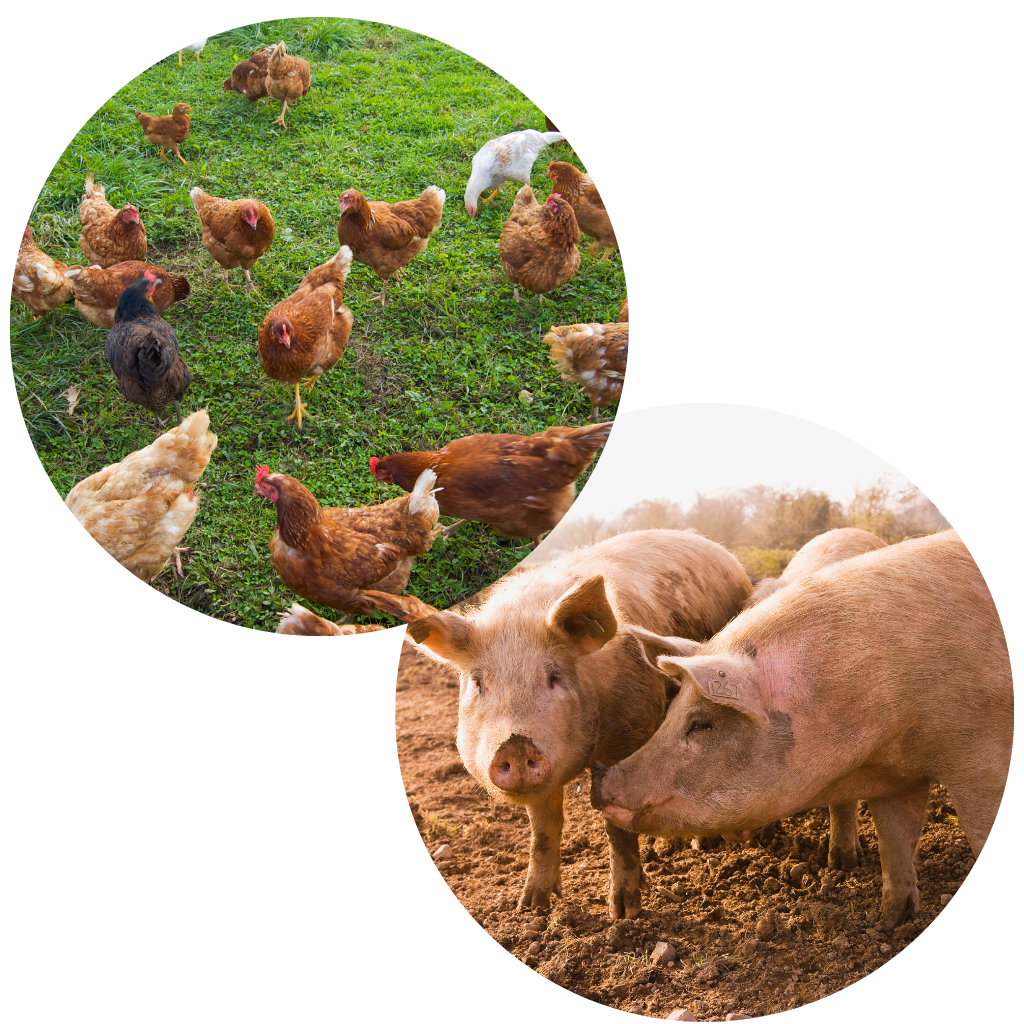
Current focus on eggs + pork
Hotels face significant challenges when sourcing animal proteins due to the environmental impacts of feed production and waste, human-health risks from antibiotic use, labor concerns, and major animal-welfare issues such as extreme confinement in egg and pork systems. Each animal species comes with distinct production practices that influence the overall impact of its products.
While eggs and pork have been identified as the animal products to currently focus on, other animal products such as beef, broiler chickens, dairy, and seafood (each with well-documented environmental and social challenges) should not be dismissed.
As with other priority categories, a phased approach is recommended.
Hotel Action
Hotels can start responsibly sourcing eggs and pork by implementing the following:
- Work with suppliers to transition to cage-free eggs and crate-free or higher-welfare pork via verified claims from suppliers and/or credible third-party certifications.
- Consider opportunities to reduce overall animal-protein use by offering plant-based alternatives.
Click on the following areas to learn more about responsibly sourcing eggs and pork.
Key Impact Areas
- Animal Welfare
- Environmental
- Social
Traditional eggs and pork production can consist of inhumane conditions for the animals including inadequate space, behavioral restrictions and physical stress and harm.
Typical non-cage-free eggs farms only provide 67-86 square inches of space per hen. (Animal Equality)
*A standard 8.5 × 11 inch sheet of paper = 93.5 square inches*
Sows are typically pregnant for more than 50% of their lives. Pregnant sows are confined to crates that prevent lateral movement during their gestation period of 112-116 days. (The Humane Society)
The production of eggs and pork requires significant natural resources, including land, water, and energy to grow animal feed.
In some regions, feed production contributes to deforestation and habitat loss. Additionally, manure management and other animal byproducts can lead to air, water, and soil contamination if not properly controlled.
Together, feed cultivation, manure emissions, and the use of heavy machinery contribute to the sector’s overall greenhouse gas footprint and broader climate impacts. (ASPCA)
Public Policies - Passed and Proposed as of January 2026
*Public policies will be updated annually. Hotels should review applicable state and local regulations to ensure their operations remain in full compliance with current requirements. See below.
The following states have cage-free eggs and/or pork gestation crate/confinement requirements. (CageFreeLaws.com)
Check city/county policies to also ensure local compliance
Arizona
| Products Covered | Law/Bill | Enforcement/Effective Date | Requirements |
|---|---|---|---|
|
Eggs |
Proposed A.C.C. R3-2-907 |
Delayed enforcement until 2034 |
All eggs sold must be from cage-free hens |
California
| Products Covered | Law/Bill | Enforcement/Effective Date | Requirements |
|---|---|---|---|
|
Eggs + Pork |
Proposition 12 |
January 1, 2024 |
Eggs must be from cage-free hens; pork must be from unconfined pork |
Colorado
| Products Covered | Law/Bill | Enforcement/Effective Date | Requirements |
|---|---|---|---|
|
Eggs + Pork |
HB 20-1343 |
January 1, 2025 |
Eggs must be from cage-free hens; pork must meet space requirements |
Massachusetts
| Products Covered | Law/Bill | Enforcement/Effective Date | Requirements |
|---|---|---|---|
|
Eggs + Pork |
Prevention of Animal Cruelty Act |
August 23, 2023 |
Eggs must be from cage-free hens; pork must be from unconfined pork |
Michigan
| Products Covered | Law/Bill | Enforcement/Effective Date | Requirements |
|---|---|---|---|
|
Eggs |
Senate Bill 174 |
December 31, 2024 |
All eggs sold must be from cage-free hens |
Nevada
| Products Covered | Law/Bill | Enforcement/Effective Date | Requirements |
|---|---|---|---|
|
Eggs |
Assembly Bill 399 |
January 1, 2024 |
All eggs sold must be from cage-free hens |
Oregon
| Products Covered | Law/Bill | Enforcement/Effective Date | Requirements |
|---|---|---|---|
|
Eggs |
Senate Bill 1019 |
January 1, 2024 |
All eggs sold must be from cage-free hens |
Washington
| Products Covered | Law/Bill | Enforcement/Effective Date | Requirements |
|---|---|---|---|
|
Eggs |
House Bill 2049 |
January 1, 2024 |
All eggs sold must be from cage-free hens |
Additional Resources
Product Alternatives
The following alternatives only focus on improving animal welfare standards for eggs and pork products. Suppliers of these products should also be assessed on the environmental and social aspects of their operations. See the Supplier Resources section for more information.
 Hotels can also consider offering plant-based alternatives.
Lowering overall consumption of animal products enables hotels to reinvest savings into more sustainable alternatives, including more responsible meat products and plant-based products, even when those products have a higher unit cost.
Many guests appreciate the variety of options, which gives hotels the opportunity to diversify menu offerings while integrating sustainability into their operations.
Eggs: There are four product alternatives for conventional eggs. See definitions below.
- Cage-Free
- Free-Range Organic
- Pasture-Raised
Hens are not kept in battery cages and can move freely within an indoor area, allowing them to express natural behaviors. Typically, these systems do not include outdoor access.
Hens are never confined to cages and have regular access to the outdoors, where they can forage and roam.
To be considered Free-Range Organic, additional animal welfare and environmental requirements must be met.
Hens spend most of their time outdoors on pasture with minimal restrictions, providing the largest amount of space per bird when indoors compared to other systems.
Pork: There are four product alternatives for conventional pork. See definitions below.
-
Gestation Crate-Free
-
Group-Housed
-
Organic
-
Pasture-Raised
-
Reduced-Confinement/Crate-Limited Pork
Crates/stalls are not used during any portion of the gestation period; however, standards such as housing quality and space can still vary.
Pregnant sows are only confined in gestation crates for 4-6 weeks of pregnancy and then returned to group housing with other pigs in a group system.
Pigs are raised with specific standards regarding feed, banning of antibiotics and hormones, outdoor access/ability to display natural behaviors, and other animal welfare and environmental requirements.
Pigs spend most of their time outdoors without any restrictions and the largest amount of space per sow when indoors.
Pregnant sows are treated with limited confinement in crates/stalls over the course of their gestation period (e.g. only during breeding or early pregnancy).
 Companies and individual hotels should determine which production standard best aligns with their sourcing goals and operational priorities. Discussions with suppliers should focus on cost, product availability, and the supplier’s ability to verify production methods through credible certifications or other substantiated product claims. Refer to the Third-Party Certifications section below for recognized programs/certifications that verify the production conditions for different egg and pork options.
Third-Party Certifications for Cage-Free Eggs and Responsible/Crate-Free Pork
| Certification | Products Covered | Description | Certifying Body | Notes |
|---|---|---|---|---|
|
Eggs + Pork |
Pasture-raised with strict welfare standards, including no confinement. |
A Greener World |
Considered one of the highest welfare certifications; smaller farms eligible. |
|
|
Eggs |
Focuses solely on cage-free housing, not outdoor access or additional welfare practices; not a formal certification but a verification |
USDA (Shell Egg Rule, voluntary label) |
Focuses solely on cage-free housing, not outdoor access or additional welfare practices. Not a formal certification but a verification |
|
|
Eggs + Pork |
Hens must be cage-free with at least 1.5 sq ft per bird; access to perches and nest boxes. No gestation or farrowing crates for pregnant sows and adequate space must be provided. |
Humane Farm Animal Care (HFAC) |
Widely recognized by retailers; focuses on animal welfare, not organic feed. |
|
|
Eggs + Pork |
Environmental stewardship, fair labor practices, animal welfare, and food safety |
Whole-farm certification |
||
|
Eggs + Pork (Step 2+ for crate-free) |
Hens must be cage-free; higher steps include more space and enrichment. No gestation or farrowing crates for sows and adequate space must be provided. |
Global Animal Partnership |
Step 1 = basic cage-free; Step 5+ = pasture access and high welfare |
|
|
Eggs + Pork |
Must have USDA Organic certification and either Animal Welfare Approved, Global Animal Partnership 4, 5 or 5+, or specified Certified Humane certification |
Addresses animal welfare, soil health and farm worker treatment |
||
|
Eggs |
Hens are cage-free with specific requirements for space, food, water, air quality, nesting areas, and general husbandry practices |
United Egg Producers |
Producers that carry the label agree to annual compliance assessments by independent third-parties |
|
|
Eggs + Pork |
Hens are cage-free, with access to outdoors and organic feed. Gestation crates are heavily restricted for pregnant sows and adequate space must be provided. |
USDA |
Must meet both organic and cage-free standards; outdoor access is required. |
*These certifications assess the environmental and social aspects of an agricultural operation more holistically beyond specific animal welfare standards.
Cost Considerations
Eggs – $-$$
The price of cage-free eggs and free-range eggs will typically be at a premium compared to conventional eggs but on average ~$1 more per dozen in the U.S.. (Purdue Egg Price Dashboard)
Pork – $$-$$$
Compared to eggs, pork products have a higher price premium due to the overall smaller pork market in the U.S. Responsible pork products in California are estimated at ~20% higher on average. Individual hotels have reported only up to a 10% increase. (National Hog Farmer)
Given the variability in cost due to contract terms, volume pricing, location etc., hotels should consult with current and potential suppliers to understand cost premiums associated with higher welfare and more sustainable products.
Return back to the Responsible Sourcing Homepage or explore additional modules.
Return back to the Responsible Sourcing Homepage or explore additional modules.
Return back to the Responsible Sourcing Homepage or explore additional modules.
Return back to the Responsible Sourcing Homepage or explore additional modules.
Return back to the Responsible Sourcing Homepage or explore additional modules.
Return back to the Responsible Sourcing Homepage or explore additional modules.
Return back to the Responsible Sourcing Homepage or explore additional modules.
Return back to the Responsible Sourcing Homepage or explore additional modules.
Human Health
The overuse of antibiotics in animals can result in the creation of resistant bacteria. The use of hormones and growth-producing drugs can also have human health impacts. (ASPCA)
Unfair Labor Practices
Farm workers can be exposed to poor working conditions, low pay, and limited job security. Health impacts can result from exposure to dust, ammonia, and pathogens. (ASPCA)